Innovation empowering the human mind
Super fast AI powered learning
Bring any document, webpage, or phrase list, and Speed Learning turns it into fast, playful study games with native audio, romanization, and color-matched translation across 100+ languages.

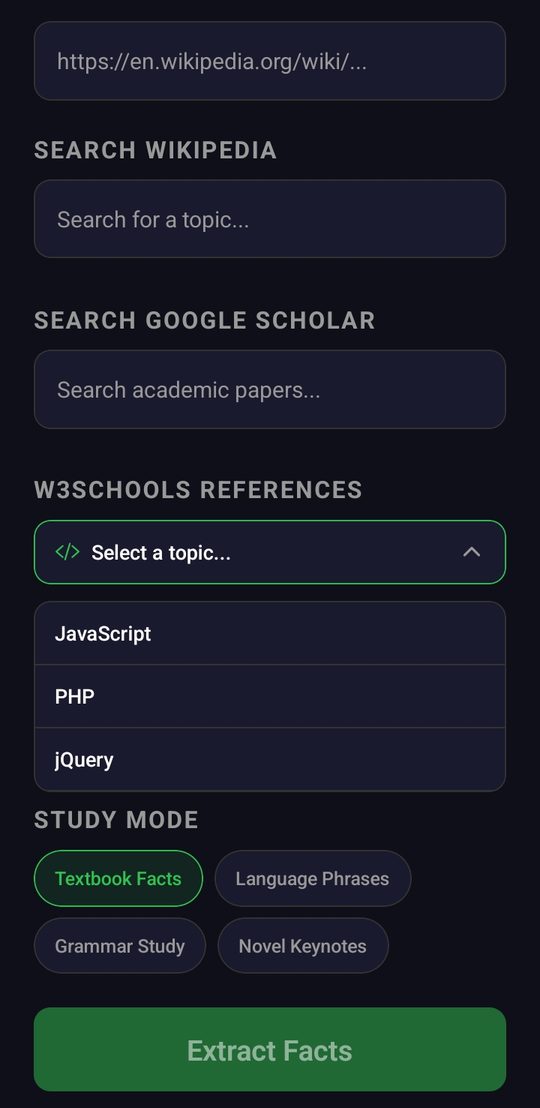
PDFs, Word & Excel files, EPUBs, photos (OCR), webpages, Wikipedia, Google Scholar, and Google Translate saved phrases. All of it becomes something you can study.
The key facts, phrases, and definitions are pulled out of your material for you, so you study what matters and skip the filler.
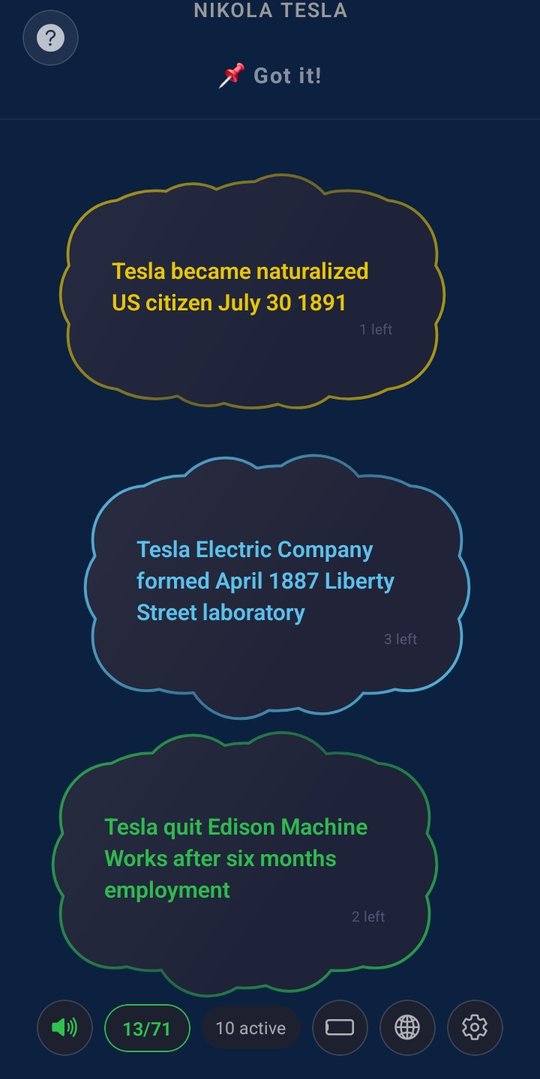
Review through fast, satisfying activities: floating bubbles and clouds, Fact Attack, Fact Pong with friends, and an auto-playing Speed Read mode.
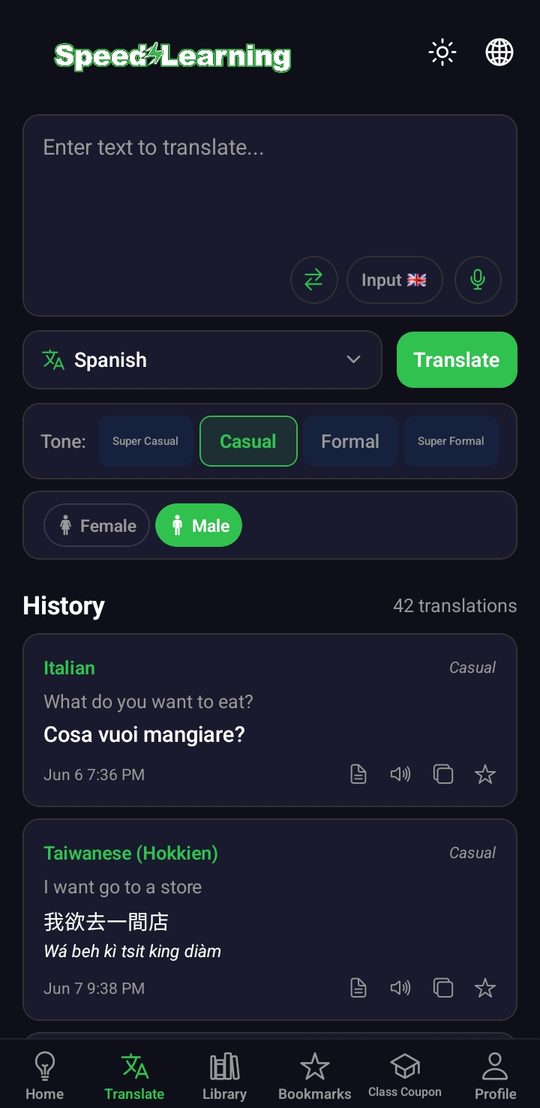
Translate facts and phrases with adjustable tone, native-voice audio, and romanization for non-Latin scripts, including Cantonese and Taiwanese Hokkien.
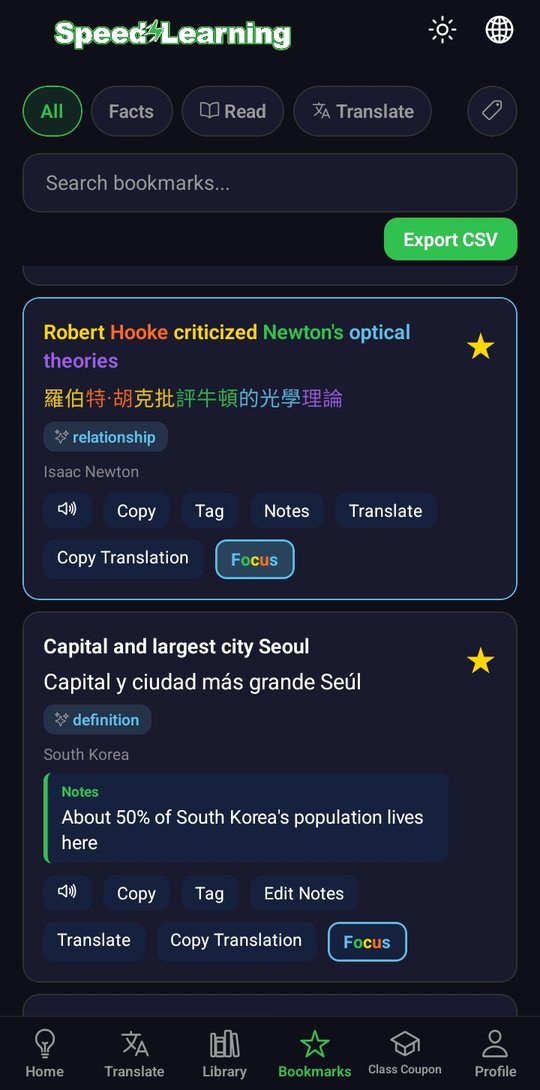
Tap any word to light it up with its match in the other language and see exactly how meaning maps between languages, word by word.
Curated phrase sets, book summaries, and developer references, ready to study in one tap. No import needed.

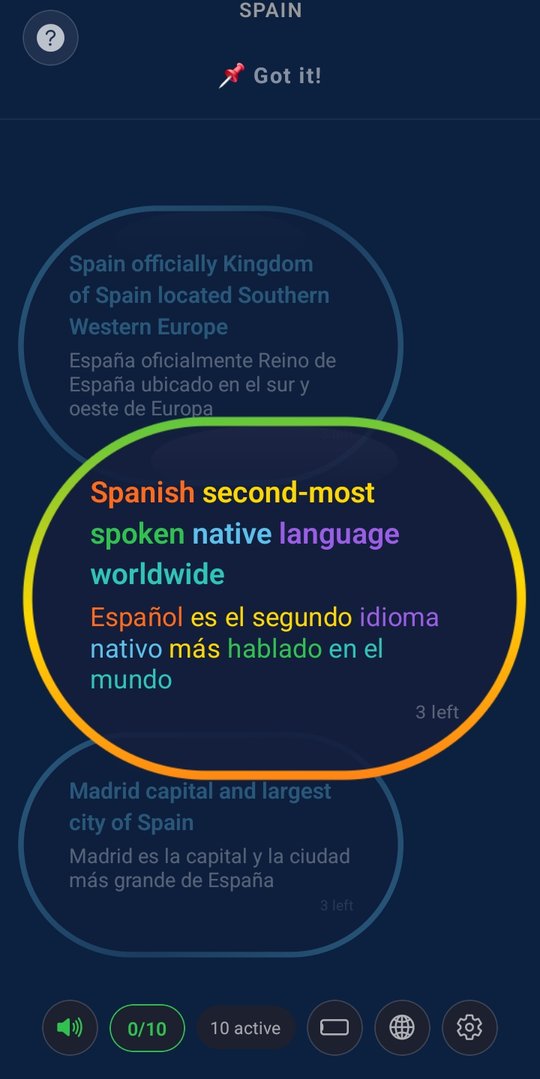
Translate into 100+ languages with tone & romanization

Tap to reveal color-matched translations

Review facts as a floating-cloud game

Import PDFs, docs, webpages & references

Save and replay everything you study
Most learning apps lock you into their content. Speed Learning flips that: bring your own material, whether a textbook, a Wikipedia article, a vocabulary list, or a coding reference, and it instantly becomes something you can study, hear, and remember.
The goal is simple: make learning anything, in any language, faster, more affordable, and genuinely fun.
From the team behind Class Coupon, where thousands of learners find discounted courses every day. Speed Learning comes from the same belief: cost and friction should never stand between you and the skills you want. Explore the free Language Library to start learning right now, before the app even launches.
Nothing in Speed Learning is decoration. Color-matched translation, bite-size facts, playful retrieval games: each one traces back to peer-reviewed research on how memory actually works, and we publish plain-language summaries of the studies we build on.
Why timing beats cramming, from Ebbinghaus to modern meta-analyses.
Red and yellow stick better: the research behind color-coded learning.
How your brain wants information packaged, in 3 to 4 chunks at a time.
What the science says about 1,000-words-per-minute claims, and what works instead.